In Alberta, your roof works harder than almost any other part of your home. Between long winters, heavy snowfall, sudden temperature shifts, and intense summer storms, roofing systems in Edmonton face year-round stress.
Regular roof inspections are not just preventative maintenance – they are essential for protecting your home’s structure, energy efficiency, and long-term value.
One of the biggest challenges in this region is the freeze-thaw cycle. Temperatures often fluctuate above and below freezing within short periods. Water seeps into small cracks, freezes, expands, and gradually weakens roofing materials. Add to that the risk of hailstorms and strong winds, and even newer roofs can develop hidden damage.
This guide explains what happens during a professional roof inspection, what inspectors check inside and outside, and when homeowners should schedule one. Whether you are maintaining your property, preparing to sell, or assessing storm damage, understanding the inspection process helps you make informed decisions.
What Happens During a Professional Roof Inspection
A professional roof inspection is a systematic evaluation of your roofing system — not just a visual glance at shingles. It includes both exterior and interior components to assess performance, durability, and potential vulnerabilities.
Exterior Inspection
The exterior review focuses on surface materials and exposed components.
Shingles
Inspectors check for cracking, curling, blistering, missing pieces, and granule loss. In Alberta’s climate, freeze-thaw expansion and hail impact often accelerate shingle wear.
Flashing
Metal flashing around chimneys, vents, skylights, and roof valleys is examined for corrosion, separation, or improper sealing. Faulty flashing is one of the most common sources of leaks.
Gutters and Drainage
Gutters are checked for blockages, sagging sections, improper slope, and granule buildup. Poor drainage increases the risk of water intrusion and ice dam formation.
Ventilation
Proper attic ventilation is essential for preventing condensation and reducing temperature imbalance. Inspectors assess intake and exhaust vents to ensure adequate airflow.
Storm Damage
After wind or hail events, inspectors look for impact marks, lifted shingles, punctures, and displaced materials that may not be visible from the ground.
Interior Inspection
Exterior damage often reveals itself inside the home.
Attic Moisture
Inspectors look for condensation, mold growth, damp insulation, and water staining. Moisture issues frequently signal ventilation imbalance or roof leaks.
Insulation Condition
Compromised insulation affects energy efficiency and may indicate long-term moisture problems.
Structural Integrity
Roof decking, rafters, and trusses are assessed for sagging, rot, or structural stress. In extreme cases, prolonged moisture can weaken load-bearing components.
Optional: Drone Roof Inspection
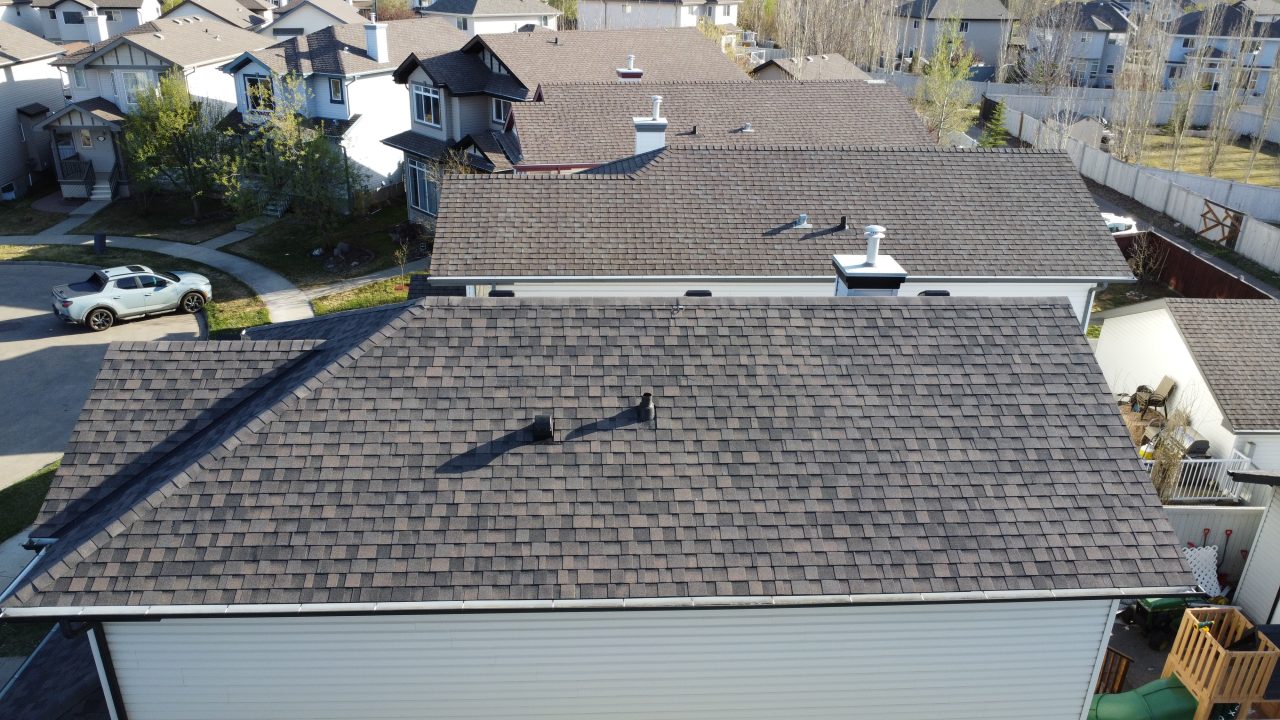
In situations involving steep slopes, limited access, or post-storm assessments, drone roof inspection technology may be used. High-resolution imagery helps identify surface damage while reducing safety risks.
However, drones complement – not replace – physical inspection when detailed analysis is required.
Signs You Need a Roof Inspection
Many homeowners delay inspections until visible leaks appear. However, early warning indicators can prevent costly repairs.
Common signs you need roof inspection include:
- Water stains on ceilings or walls
- Missing or damaged shingles
- Excess granules collecting in gutters
- Noticeable roof sagging
- Ice dams forming along eaves
- Recent hailstorm or windstorm exposure
Even subtle signs, such as rising energy bills or musty attic smells, can indicate hidden roof problems. In Alberta, post-storm inspections are especially important because hail damage may not cause immediate leaks but can shorten roof lifespan significantly.
Seasonal Roof Damage in Alberta
Edmonton’s climate creates distinct seasonal stress patterns. Understanding them helps homeowners schedule inspections strategically.
Winter Ice Dam Damage
Ice dams form when warm attic air melts snow on the roof. Meltwater refreezes at colder eaves, creating a barrier. Water backs up under shingles and penetrates the roof deck. Over time, this leads to rot, insulation damage, and interior leaks.
Spring Melt Issues
Rapid snowmelt overwhelms drainage systems. Blocked gutters and downspouts increase the risk of water infiltration. Spring is an ideal time to assess winter damage.
Hail Impact
Alberta is one of Canada’s most hail-prone regions. Hailstones bruise shingles, loosen protective granules, and crack flashing. Damage may appear cosmetic but often accelerates material deterioration.
Freeze-Thaw Cracks
Repeated expansion and contraction create micro-fractures in shingles and sealants. Over several seasons, these small weaknesses can evolve into significant structural concerns.
Because these seasonal cycles repeat annually, proactive inspections help extend roof lifespan and reduce long-term costs.
Roof Inspection Before Buying or Selling a Home
Negotiation Leverage
A documented inspection report provides buyers and sellers with objective information. Identified issues may influence price adjustments or repair agreements.
Avoid Hidden Costs
For buyers, a pre-purchase inspection prevents unexpected expenses shortly after closing. Roofing replacement is one of the most significant home maintenance investments.
Insurance Requirements
Insurance providers may request roof condition documentation, particularly after hail events or for older properties.
Real Estate Due Diligence
In competitive markets, having inspection documentation supports transparency and reduces transaction delays.
Repair or Replacement — What Comes Next?
Inspection findings typically fall into two categories.
Minor Damage → Repair
Localized shingle loss, small flashing gaps, or minor ventilation adjustments can often be addressed through targeted repair.
Structural Damage → Replacement
If the inspection reveals widespread deterioration, compromised decking, or repeated leak history, full roof replacement may be recommended.
A professional evaluation helps homeowners avoid premature replacement while preventing long-term structural risk.
Frequently Asked Questions
How often should a roof be inspected?
Most experts recommend every 1–2 years, and after major storms. In Alberta’s climate, annual inspections are advisable.
How long does an inspection take?
Typically 45 minutes to 2 hours, depending on roof size, slope, and accessibility.
Can a drone detect leaks?
Drones can identify visible damage and surface irregularities, but interior moisture assessment still requires attic inspection and physical verification.
What is included in a roof inspection checklist?
A comprehensive checklist includes shingles, flashing, drainage systems, ventilation, attic moisture, insulation, and structural elements.